
The Problem with “One-Size-Fits-All” Hormone Testing
As a NaPro-(Natural Procreative Technology) trained physician, I often see women who come to me after years of being told that “everything is normal” with their labs—despite ongoing symptoms like irregular cycles, PMS, infertility, or recurrent miscarriage. Many of them have had hormone testing done, typically on cycle day 21, and were reassured that their progesterone levels looked fine. But in reality, their hormone testing was likely mistimed—and that single detail can make all the difference in getting to the root of their concerns.
Why Day 21 Doesn’t Work for Most Women
In conventional gynecologic care, it’s standard practice to order progesterone labs on cycle day 21, based on the assumption that ovulation occurs on day 14 in a perfect 28-day cycle, and that progesterone levels peak 7 day after ovulation has occurred. But very few women fit that “average” cycle pattern. In fact, a study published in Fertility and Sterility found that only 13% of women with regular menstrual cycles actually ovulate on day 14 (Wilcox et al., 2000). The rest ovulate earlier or later, which means that testing progesterone on day 21 could miss the post-ovulatory window entirely. This doesn't even take into account all of the women who have irregular menstrual cycles, many of whom are the women seeking out hormone testing to begin with.
The NaPro Solution: Charting-Based, Post-Peak Hormone Testing
This is where NaPro Technology (Natural Procreative Technology) offers a more accurate, personalized approach.
NaPro-trained physicians use post-peak hormone testing instead of relying on arbitrary calendar days. Thanks to the detailed charting that comes with Natural Family Planning (NFP), a NaPro doctor can accurately identify Peak Day—the last day of fertile-quality cervical mucus, which correlates closely with ovulation.
We then schedule a series of blood draws for NaPro hormone testing on Peak +3, +5, +7, +9, and +11—that is, days 3, 5, 7, 9, and 11 after ovulation. During each of those days, estradiol and progesterone levels are measured to produce a hormone profile curve across the luteal phase.
What a Five-Point Hormone Curve Can Reveal
This approach gives us a five-point hormonal curve, rather than a single snapshot. And this curve often reveals patterns that day 21 labs would miss.
Here’s a hypothetical example based on a scenario I commonly see in practice: a woman with regular 30-day cycles comes in after being told her progesterone was “normal” based on day 21 testing. After charting her cycle, we discover she typically ovulates on day 18—meaning her progesterone peak actually occurs around day 25 (7 days after ovulation). When we run post-peak labs timed to her ovulation, we might find that her Peak +5 progesterone looks good, but by Peak +9 and +11, her levels have dropped off significantly. This indicates a short luteal phase or a rapid decline in progesterone—something a single day 21 lab could never identify.
By measuring multiple points across the luteal phase, we can also assess estradiol patterns, helping to detect issues related to ovulation quality, follicular development, or inflammatory conditions. This detailed profiling allows us to classify the type of luteal defect, rather than just saying progesterone is "low." It also allows for more tailored treatment, for each type of luteal phase defect, often using bioidentical progesterone or other targeted therapies and medication formulations.
A 2015 study in The Linacre Quarterly confirmed that NaPro-based hormone testing protocols improve diagnostic accuracy and treatment outcomes—particularly in women with infertility or recurrent miscarriage (Stanford et al., 2015).
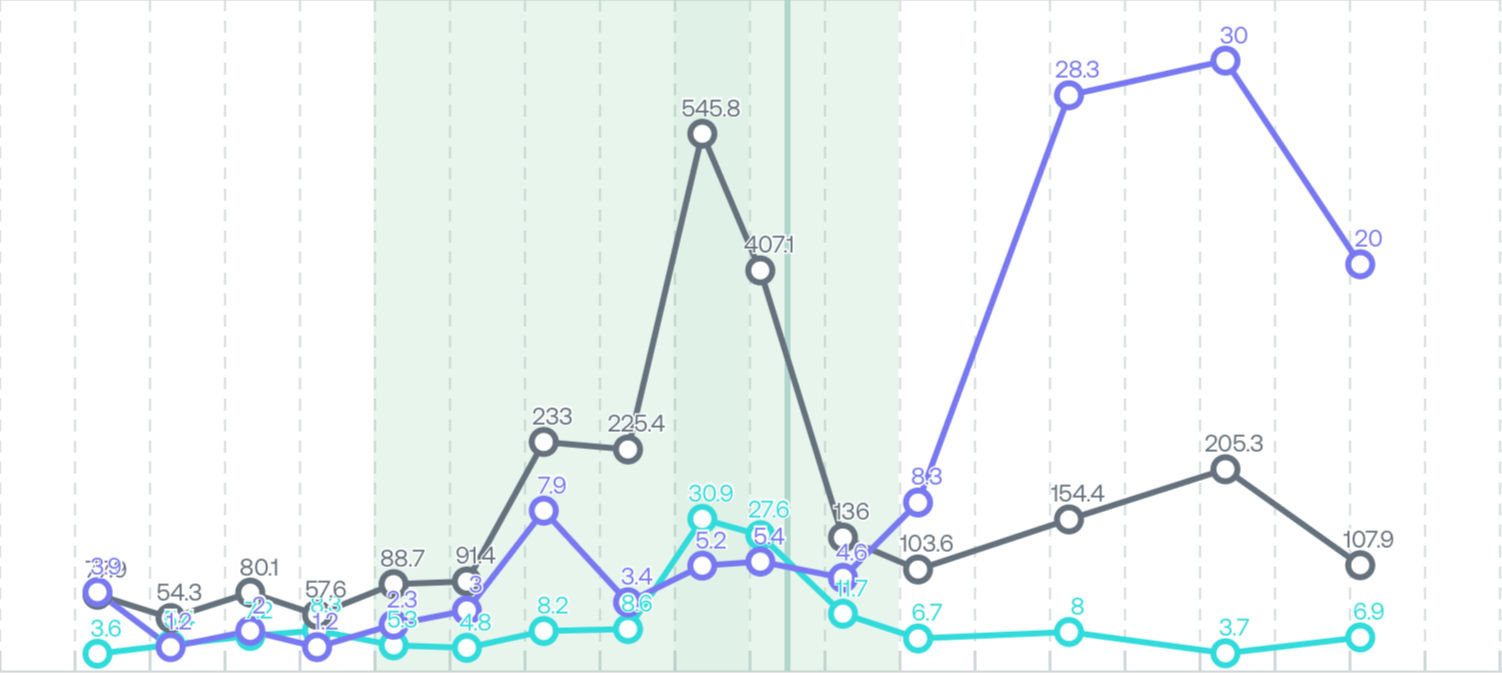 This is an actual example of a woman's hormone chart throughout one full menstrual cycle. Estrogen is represented by the black line, LH is seen by the turquoise line, and the progesterone curve is in purple. As seen in this graph, progesterone begins to rise after ovulation (LH surge) and makes a type of bell curve.
Why Accurate Ovulation Tracking Matters
Of course, none of this is possible without accurate cycle tracking. That’s why I always encourage my patients to learn and use a Natural Family Planning method such as the Creighton Model, Marquette Method, or Sympto-Thermal Method. These systems empower women to monitor cervical mucus, temperature, or hormone levels to clearly identify ovulation.
Once we know when ovulation occurs, we can time labs precisely—based on that woman’s actual cycle—not based off of a calculated average ovulation day for all women.
Conclusion: You Deserve Better Than “Normal” on Day 21
Ultimately, you are not an average cycle, and your care should reflect that. If you’ve been told your labs are normal but still struggle with reproductive health concerns, don’t settle for generic testing or treatment. NaPro Technology offers a scientifically sound, deeply personalized approach that respects your body’s design and delivers more accurate insights. You deserve answers that are as unique as your cycle.

Take the Next Step: Advocate for Yourself and Your Cycle
-
Start charting your cycle: If you’re just starting your journey, here are a few trusted tools that can help:
- Find a FertilityCare Practitioner to teach you how to properly chart using the Creighton Model of fertility charting. Click here to find an instructor near you or who offers virtual training.
- Natural Cycles – Ideal for tracking BBT even with irregular sleep
- Mira Fertility Monitor– Offers at-home hormone analysis (LH, E3G, PdG)
- Easy@Home LH Strips– Great for budget-friendly ovulation prediction
-
Seek out a NaPro-trained physician:
- Click here to find a list of NaPro trained physicians near you.
- Click here to find a list of NFP-only physicians near you. This list is more general and includes both NaPro and non-NaPro trained physicians that are friendly to NFP.
-
Ask for post-peak hormone testing based on your real ovulation day
Want more personalized insights like this?
Subscribe and follow along at the NFP Physician Blog, where we share science-backed, cycle-smart resources for women who want to understand their bodies, advocate for better care, and embrace natural fertility awareness with confidence.
References
- Wilcox AJ, Dunson D, Baird DD. The timing of the “fertile window” in the menstrual cycle: Day-specific estimates from a prospective study. Fertil Steril. 2000;73(3):499–504.
- Stanford JB, Parnell TA, Boyle PC. Outcomes from treatment of infertility with natural procreative technology in an Irish general practice. Linacre Q. 2015;82(4):273–282.
- Hilgers TW, Prebil AM. The ovulation method—vulvar observations as an index of fertility. Obstet Gynecol. 1979;53(1):12–22.