Detoxing from hormonal birth control and transitioning to natural family planning (NFP) is a process that can benefit greatly from a supportive diet, hydration, and certain supplements. The goal is to nourish the body, support liver function (the liver metabolizes hormones), and establish hormonal balance. Let's explore how you can support your body through this phase, nourishing it back to its natural cycle and normal hormone levels.
Navigate Where You Want to Go:
- Cruciferous Vegetables: Enhancing Hepatic Detoxification
- Fiber: Promoting Hormonal Excretion
- Omega-3s: Reducing Inflammatory Response
- Phytoestrogens and Hormonal Modulation
- Antioxidants: Eliminating Free Radicals and Supporting Cellular Detoxification
- Liver Supportive Foods
Integrative Approaches to Wellness
Foods to Eat in a Birth Control Detox:
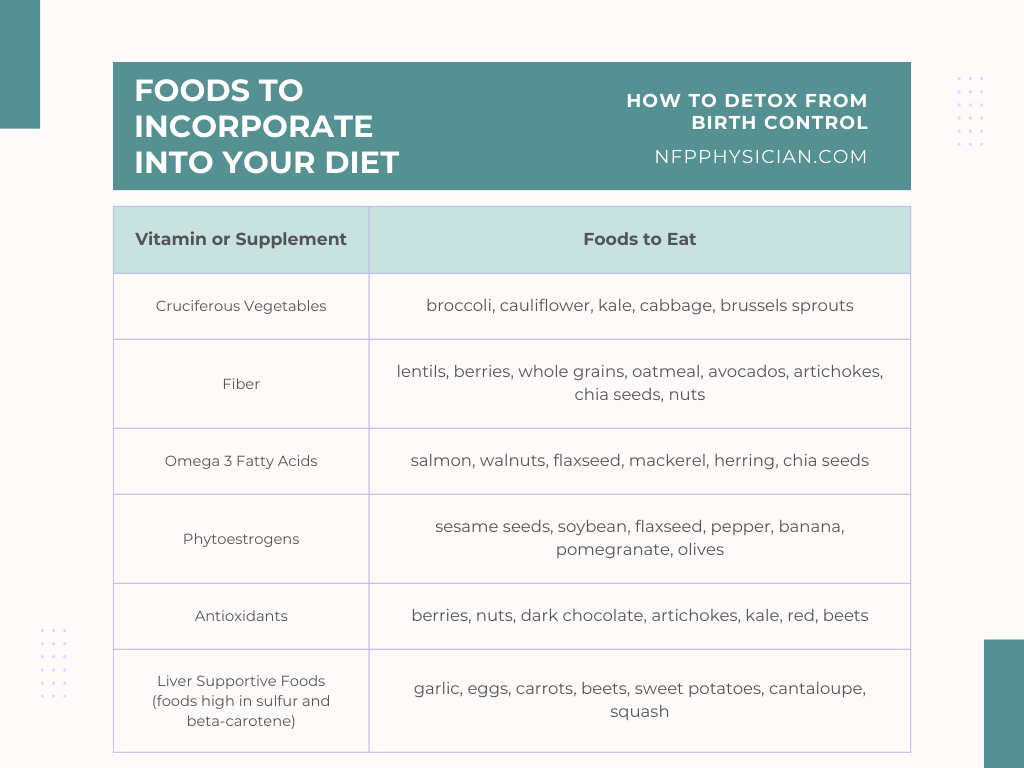
1. Cruciferous Vegetables: Enhancing Hepatic Detoxification with Phytonutrients: Your liver is the work horse in hormone processing and getting rid of excess hormones. To give it a boost, eat more cruciferous veggies like broccoli, cauliflower, and kale. Cruciferous vegetables are not only rich in essential nutrients, but also contain glucosinolates that when broken down form biologically active compounds that a number of studies have shown aid in liver detoxification and help maintain estrogen balance.
2. Fiber: Promoting Hormonal Excretion: Research in the "Journal of Clinical Endocrinology & Metabolism" demonstrates that fiber intake cleans out your digestive tract and helps rid your body of excess hormones through excretion in the stool. Excess estrogen binds to fiber within the gut, and then is able to leave the body when having a bowel movement rather than sitting in the gut during constipation, which would lead to the excess estrogen being reabsorbed. Additionally, fiber keeps you feeling full longer, aids in stabilizing blood sugar, and helps to relieve constipation by keeping your bowel movements regular. You can get fiber in many different types of foods such as lentils, berries, and whole grains.
3. Omega-3s: Reducing Inflammatory Responses: Inflammation can be a silent hormone disrupter. Omega-3 fatty acids, found in foods such as fatty fish (i.e. salmon), walnuts, and flaxseeds, are your natural anti-inflammatory agents. Omega-3 fatty acids, as documented in the "Journal of Clinical Investigation," modulate the production of inflammatory eicosanoids and cytokines, which are mediators of inflammation, thus potentially mitigating inflammation-induced endocrine disruption. In other words, they make sure your hormones are well balanced and working together without inflammation wreaking havoc on the body. Plus, omega-3 fatty acids are key for optimal heart and brain health.
Click here for my recommendation of daily fish oil supplements.
4. Phytoestrogens and Hormonal Modulation: Phytoestrogens in foods like flaxseeds, soybeans, olives, and sesame seeds can help naturally balance estrogen levels. They competitively bind to estrogen receptors in the body, which prevents the binding of more potent estrogen and estrogen metabolites found in hormonal birth control. By gently binding to estrogen receptors, phytoestrogens help to moderate estrogen's effects, which can be particularly beneficial during this transition off of birth control.
5. Antioxidants: Eliminating Free Radicals and Supporting Cellular Detoxification: Your body goes through a lot during the hormonal birth control detox process. Antioxidants from berries, nuts, and even a bit of dark chocolate can shield your cells from stress by reducing free radicals in the body and aiding in the detoxification process. As an added benefit, a reduction in free radicals may reduce the risk of different chronic diseases including heart disease, cancers, and cognitive decline.
6. Liver-Supportive Foods: Your liver is your devoted detox machine. The "Journal of Nutrition" has published that foods rich in sulfur (i.e. garlic and eggs) and beta-carotene (i.e. beets and carrots) provide your liver with the nutrients it needs to process and eliminate excess hormones efficiently.
Integrative Approaches to Wellness:
Hydration is Key:
Water: The Building Block of Life: Hydration is key. It aids in flushing out toxins and keeps your system running optimally. Aim for at least 8-10 glasses of water a day, and if you're feeling fancy, why not add some cucumber or lemon for added antioxidants and Vitamin C?
Herbal Teas for Gentle Support: Herbs like dandelion root and milk thistle are soothing for your liver, which help to support its natural detox functions. Dandelion has been used to treat liver disease as well as other diseases due to its antioxidant properties. Milk thistle's complete mechanism of action is not well understood, but it is thought that it may be protective of the liver by antioxidant activity, aiding in protein synthesis, blocking toxins at the membrane, antifibrotic activity, and potentially having some anti-inflammatory and immune modulating effects. Green tea is also great – it is loaded with antioxidants and gives you a gentle energy lift without the jitters of coffee.
Click here for my recommendation of a milk thistle and dandelion vitamin supplement.
Nutritional Supplements:
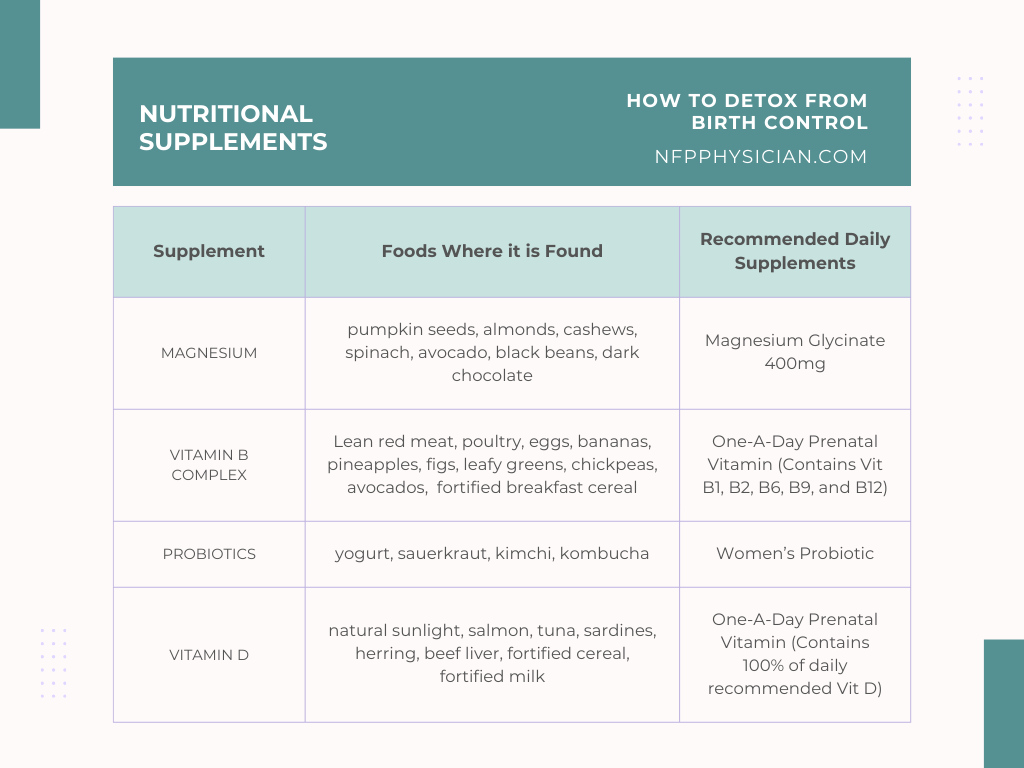
Magnesium: The Relaxer: This magnificent mineral not only acts as a cofactor for over 300 enzymatic reactions in your body (i.e. protein and neurotransmitter production, gene maintenance, muscle movement, and nervous system regulation) but is also fantastic for improving sleep quality and supporting hormonal balance. Think of it as your evening chill pill.
Adequate magnesium intake is associated with improved sleep quality due to its ability to regulate melatonin production and muscle relaxation. It also mitigates symptoms of premenstrual syndrome (PMS), including mood changes and water retention, by modulating the release and action of prolactin and enhancing the balance of progesterone to estrogen. This makes magnesium especially valuable during the hormonal fluctuations experienced when transitioning off hormonal birth control.
Foods that are high in magnesium include pumpkin seeds, almonds, cashews, spinach, avocado, black beans, and dark chocolate. Click here for my recommended additional magnesium supplement.
Vitamin B Complex: The Energy and Detox Booster: B vitamins, especially B6 and B12, are pivotal for energy production and supporting your liver in detoxification. Vitamin B6, in particular, is essential for the metabolism of amino acids, the production of neurotransmitters such as serotonin and dopamine, and the synthesis and breakdown of estrogen. Folate (B9) and vitamin B12 are crucial for methylation processes, which are involved in DNA synthesis and hormone metabolism.
Supplementation with B vitamins can support liver function in the detoxification of hormones, enhance mood by influencing neurotransmitter synthesis, and provide energy by improving mitochondrial function. This supports overall vitality and helps manage the energy dips and mood fluctuations that may accompany the withdrawal from hormonal contraceptives.
Lean red meat, poultry, and eggs are great sources of B12. B6 can be found in meat (especially liver), bananas, pineapples, figs, leafy greens, chickpeas, avocados, and fortified breakfast cereals (such as Raisin Bran). Furthermore, your prenatal vitamin is a wonderful daily addition to get you these important vitamins. Click here for one of my top recommended prenatal vitamins.
Probiotics for a Happy Gut: A healthy gut is fundamental for effective detoxification and overall health. Probiotics help maintain a balanced gut microbiome. By enhancing gut barrier integrity, probiotics can prevent the reabsorption of estrogen from the gut, aiding in its excretion and contributing to hormonal equilibrium.
You can either take probiotic supplements, or get probiotics naturally in your diet through foods like yogurt, sauerkraut, kimchi, pickles, and kombucha -- all of which are some of my favorite foods! You can also take daily probiotic supplements. Click here for my recommendation of a daily women's probiotic.
Vitamin D: The Sunshine Vitamin: It's common to be low in Vitamin D, and it plays a crucial role in hormone production, positive mood, and immune function. In fact, many people experience seasonal depression and frequent colds/illness during the winter months due to a lack of sunlight, and therefore low vitamin D levels. Given its role in the synthesis of hormones such as estrogen and progesterone, maintaining optimal vitamin D levels is vital during the transition to NFP, supporting overall hormonal balance and well-being.
Therefore, make sure to get outside and soak up some natural sunlight (while wearing sunscreen, of course), and take an additional supplement to ensure that you get a boost of this important vitamin. This vitamin can also be found in your daily prenatal vitamin.
Click here to read my blog on the best prenatal vitamins.
Lifestyle:
Limiting the Not-so-goods: Processed foods and sugars can cause inflammation and hormonal imbalances, so it's best to keep them to a minimum. Same goes for alcohol and caffeine - enjoy them, but in moderation.
Move, Rest, and Breathe: Regular exercise, adequate sleep, and stress management are foundational for hormonal balance. Find an activity you love, ensure you're getting quality rest, and make sure to add in some relaxing activities to try to keep stress at bay. These calming things could include prayer, a soothing bath, or curling up on the couch with a good book.
Conclusion:
Transitioning off hormonal birth control is the start to your health and fertility journey. By grounding this journey in scientific evidence and integrating dietary, lifestyle, and supplemental strategies, individuals can support their bodies' natural rhythms and hormonal balance. Remember to listen to your body, consult with healthcare professionals, and embrace this beautiful opportunity to reconnect with your natural cycle.
Click here to read my blog about how to get started with NFP.
Click here to read my blog about how to pick which method of NFP is best for you.
Resources:
https://www.healthline.com/nutrition/magnesium-benefits#anti-inflammatory
https://my.clevelandclinic.org/health/diseases/22363-high-estrogen
https://pubmed.ncbi.nlm.nih.gov/3628202/
https://jn.nutrition.org/article/S0022-3166(22)08293-1/pdf?ck=nck
Walker, W. A., E. Martens, P. Sherman, J. Lampe, M. Hullar, C. Wu. Functional foods for health promotion: microbes and health Extended abstracts from the 11th Annual Conference on Functional Foods for Health Promotion. April 2008. Nutrition Reviews, Volume 67, Issue 1, 1 January 2009, Pages 40–48, https://doi.org/10.1111/j.1753-4887.2008.00135.x
https://academic.oup.com/nutritionreviews/article/67/1/40/1840719?login=false
Mumford, S., E. Schisterman, A. Siega-Riz, A. Gaskins, J. Wactawski-Wende, T. VanderWeele. Effect of Dietary Fiber Intake on Lipoprotein Cholesterol Levels Independent of Estradiol in Healthy Premenopausal Women. American Journal of Epidemiology, Volume 173, Issue 2, 15 January 2011, Pages 145–156, https://doi.org/10.1093/aje/kwq388
https://academic.oup.com/aje/article/173/2/145/100916
Calder PC. n-3 polyunsaturated fatty acids, inflammation, and inflammatory diseases. Am J Clin Nutr. 2006 Jun;83(6 Suppl):1505S-1519S. doi: 10.1093/ajcn/83.6.1505S. PMID: 16841861.
https://pubmed.ncbi.nlm.nih.gov/16841861/
Peluso, I., and Serafini, M. (2017) Antioxidants from black and green tea: from dietary modulation of oxidative stress to pharmacological mechanisms. British Journal of Pharmacology, 174: 1195–1208. doi: 10.1111/bph.13649.
https://bpspubs.onlinelibrary.wiley.com/doi/full/10.1111/bph.13649
Krajka-Kuźniak V, Paluszczak J, Szaefer H, Baer-Dubowska W. Betanin, a beetroot component, induces nuclear factor erythroid-2-related factor 2-mediated expression of detoxifying/antioxidant enzymes in human liver cell lines.British Journal of Nutrition. 2013;110(12):2138-2149. doi:10.1017/S0007114513001645'
Mulrow C, Lawrence V, Jacobs B, et al. Milk Thistle: Effects on Liver Disease and Cirrhosis and Clinical Adverse Effects: Summary. 2000. In: AHRQ Evidence Report Summaries. Rockville (MD): Agency for Healthcare Research and Quality (US); 1998-2005. 21.
https://www.ncbi.nlm.nih.gov/books/NBK11896/
Pfingstgraf IO, Taulescu M, Pop RM, Orăsan R, Vlase L, Uifalean A, Todea D, Alexescu T, Toma C, Pârvu AE. Protective Effects of Taraxacum officinale L. (Dandelion) Root Extract in Experimental Acute on Chronic Liver Failure. Antioxidants (Basel). 2021 Mar 24;10(4):504. doi: 10.3390/antiox10040504. PMID: 33804908; PMCID: PMC8063808.